Sewer line replacement cost
Updated 2026-09-04 · 9 min read
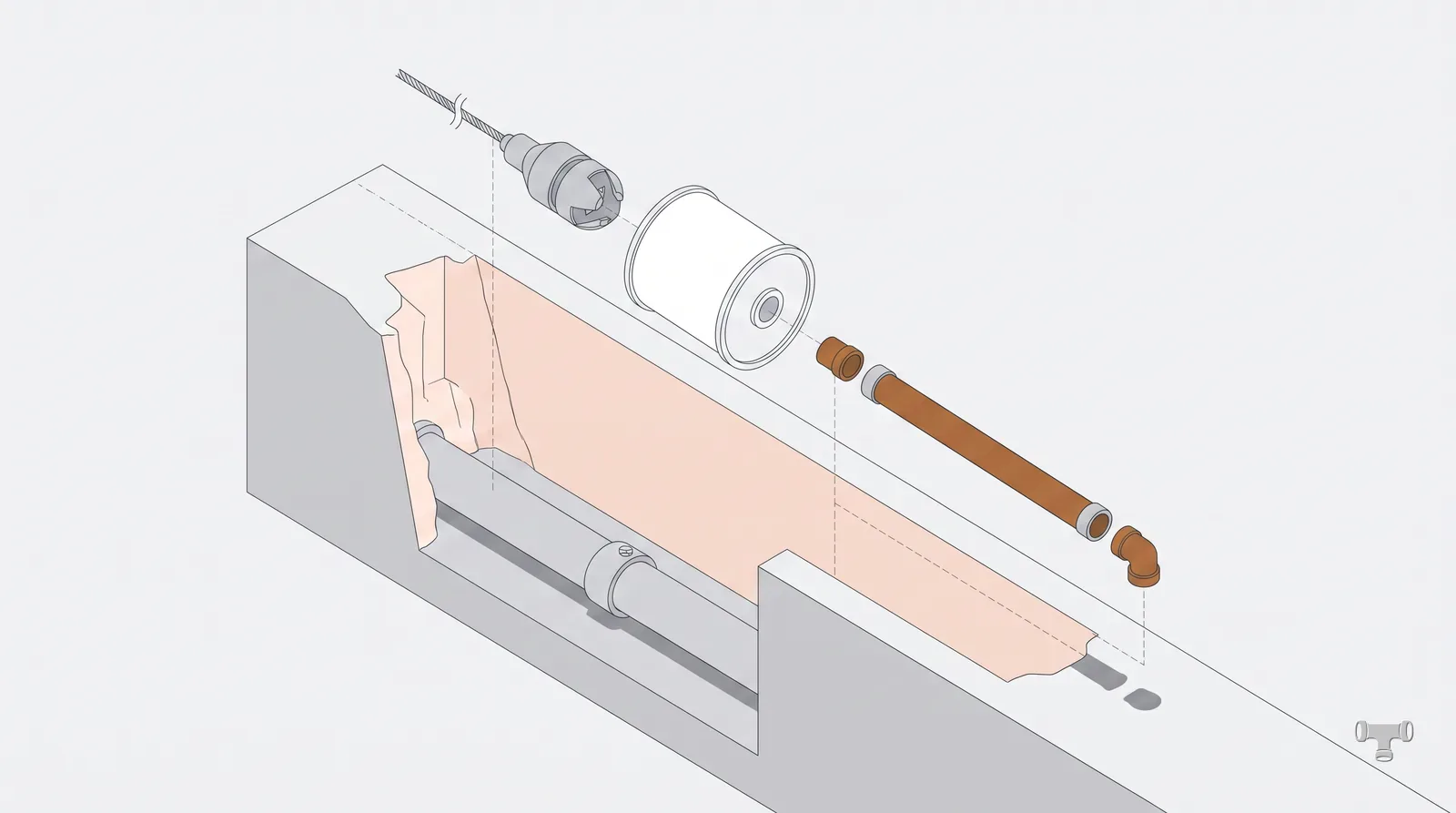
Three methods, three cost shapes
A sewer lateral is replaced one of three ways, and they do not scale the same. Open cut is cheap per foot and expensive per obstacle. Pipe bursting is expensive per foot and almost indifferent to what is above it. Cured-in-place lining sits between them and depends on the host pipe still being round.
| Method | Per foot | Access | Best when |
|---|---|---|---|
| Open cut | $60–200 | trench | Shallow, open yard, short run |
| Pipe bursting | $120–300 | 2 pits | Under drive, patio or mature trees |
| CIPP lining | $90–250 | 1–2 pits | Host pipe intact, no offsets |
| Spot repair | $1,200–4,500 | 1 pit | One defect, rest of the line sound |
Restoration is the line that doubles the job
Camera first, always
Nothing on this page can be priced without a camera survey and a locate. The survey tells you the material, the depth, the defect and whether the line still holds its shape; the locate tells you where it runs and what is above it. A quote given without both is a guess wearing a number.
What you are looking for: offset joints, root intrusion at the joints, a belly holding water, and whether the material is clay, cast iron, Orangeburg or PVC. Orangeburg especially is a replace-not-line answer, because it deforms rather than cracks.
Permits, right of way and the city's half
Almost every jurisdiction permits sewer lateral work, and many inspect the open trench before backfill. If the run crosses a public sidewalk or street you are into a right of way or encroachment permit, traffic control, and sometimes a bonded contractor requirement — three separate approvals with three separate lead times.
Establish where the property's responsibility ends. In some cities the owner owns the lateral to the main; in others the city takes over at the property line. That boundary can be half the length of the job.
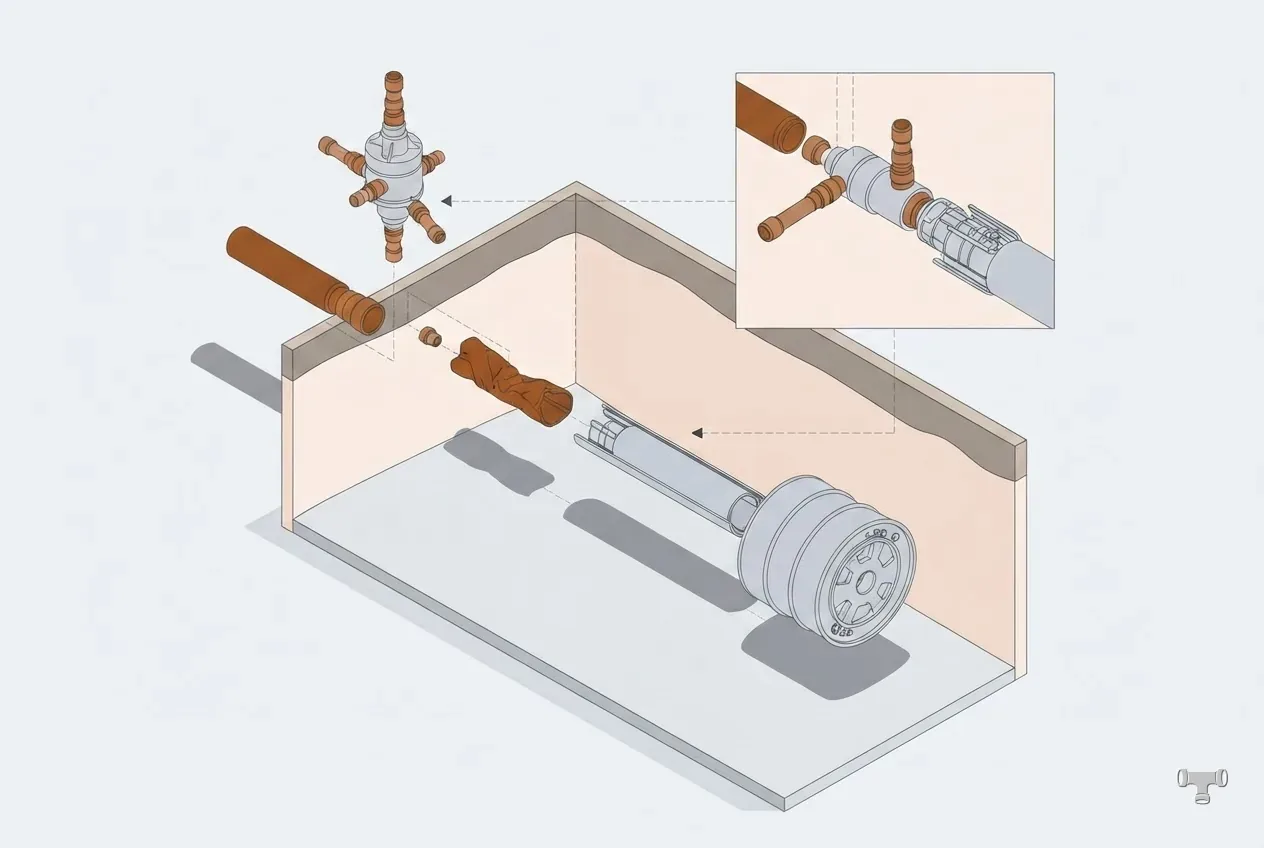
Grade is the quality line
A replaced lateral is only as good as its grade. IPC Table 704.1 sets 1/8" per foot as the minimum for a 4" line, and holding that over fifty or eighty feet of trench is real work: bedding compacted evenly, no rocks under the pipe, and the invert checked as it goes in.
A trench that settles unevenly gives you a belly, and a belly in a sewer lateral is the fault the whole job was supposed to remove. Work the fall out first with the drain slope calculator and get the numbers on the drawing.
Code violation
What a complete quote contains
- 1
The survey
Camera footage and a locate, with the defect at a stated distance from the cleanout.
- 2
The method and why
Open cut, burst or line — with the reason it was chosen over the other two.
- 3
Length, depth and material
Feet of pipe, depth at each end, and what is going in.
- 4
Restoration, named
Lawn, gravel, asphalt or concrete, and to what standard.
- 5
Permits and inspections
Which permits, who pulls them, and whose schedule the inspection sits on.