Slab leak repair cost
Updated 2026-09-04 · 9 min read
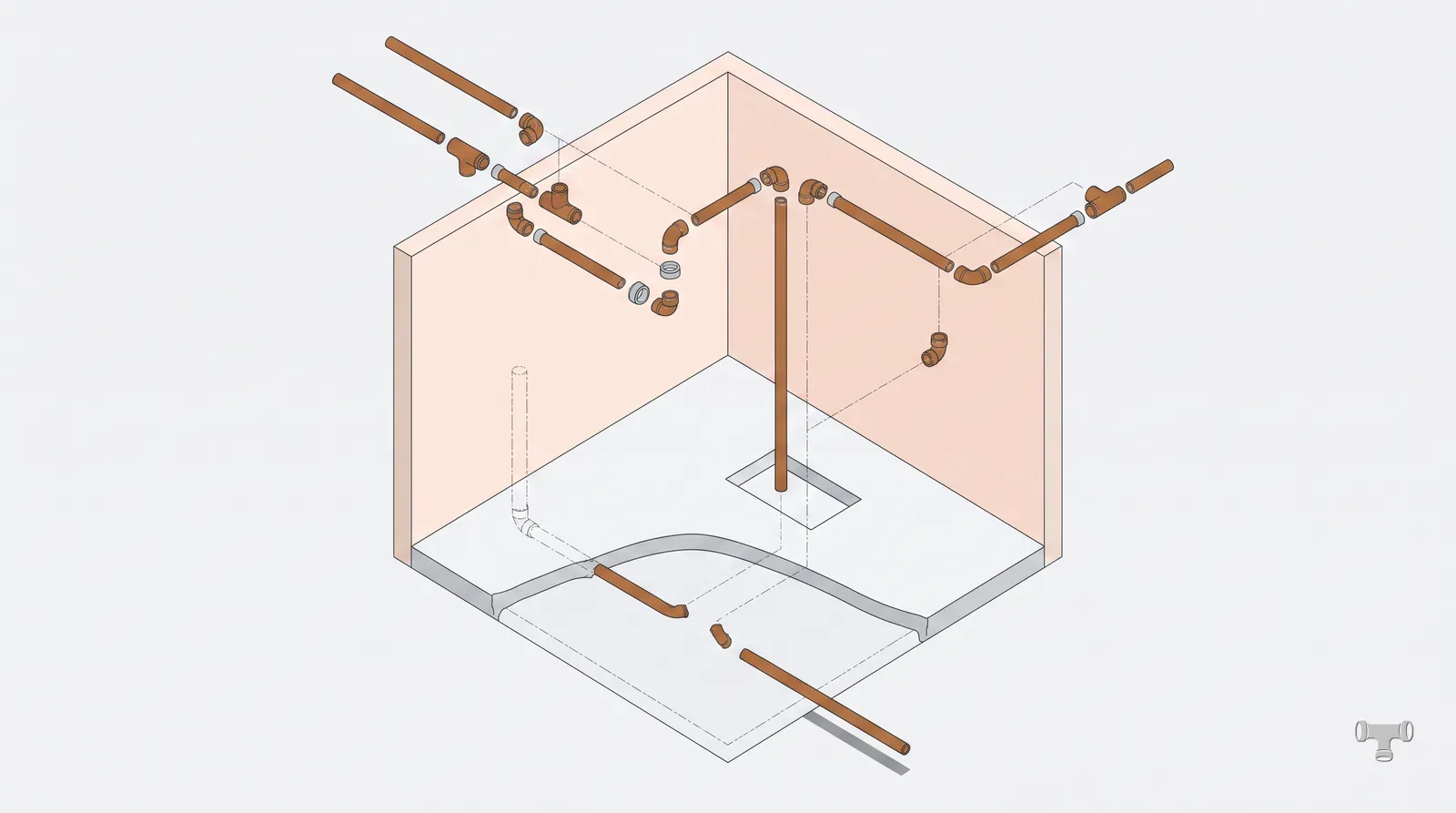
Three repair paths, three prices
A slab leak is not one job. Once it is located you choose between opening the floor at the leak, abandoning that segment and running a new line overhead, or repiping the house. The three answers cost different amounts and they suit different houses.
| Path | Typical band | Disruption | Right when |
|---|---|---|---|
| Locate only | $150–600 | None | Always first |
| Spot repair through the slab | $1,500–5,000 | Floor opened | One leak, sound pipe, accessible |
| Reroute overhead | $1,200–4,500 | Ceiling and wall patches | One leak, floor finish precious |
| Whole-house repipe | see the calculator | Whole house | Second or third leak |
The second leak decides
Locating comes first and it is cheap
Acoustic listening, pressure isolation and a thermal camera between them place most slab leaks within a foot or two, and the whole exercise is a few hundred dollars against a repair measured in thousands. Nobody should be cutting concrete on a guess.
Isolation is the step people skip: valve off zones and watch the pressure to confirm the leak is on the hot side, the cold side, or neither. A pressure test that holds means you are looking at something other than a supply leak, and that changes the trade you call.
Confirming it is a slab leak
- 1
Turn everything off
Every fixture, every appliance, the irrigation. Nothing running anywhere.
- 2
Read the meter twice
Read it, wait two hours with no draw, read it again. Movement means water is going somewhere. The EPA screen is exactly this.
- 3
Isolate the water heater
Close the cold inlet. If the meter stops, the loss is on the hot side — the commonest slab leak by a wide margin.
- 4
Look for the warm spot
A hot-side slab leak often warms a patch of floor. It is crude and it works.
- 5
Call for a locate
With those four answers the locate is faster, and faster locates cost less.
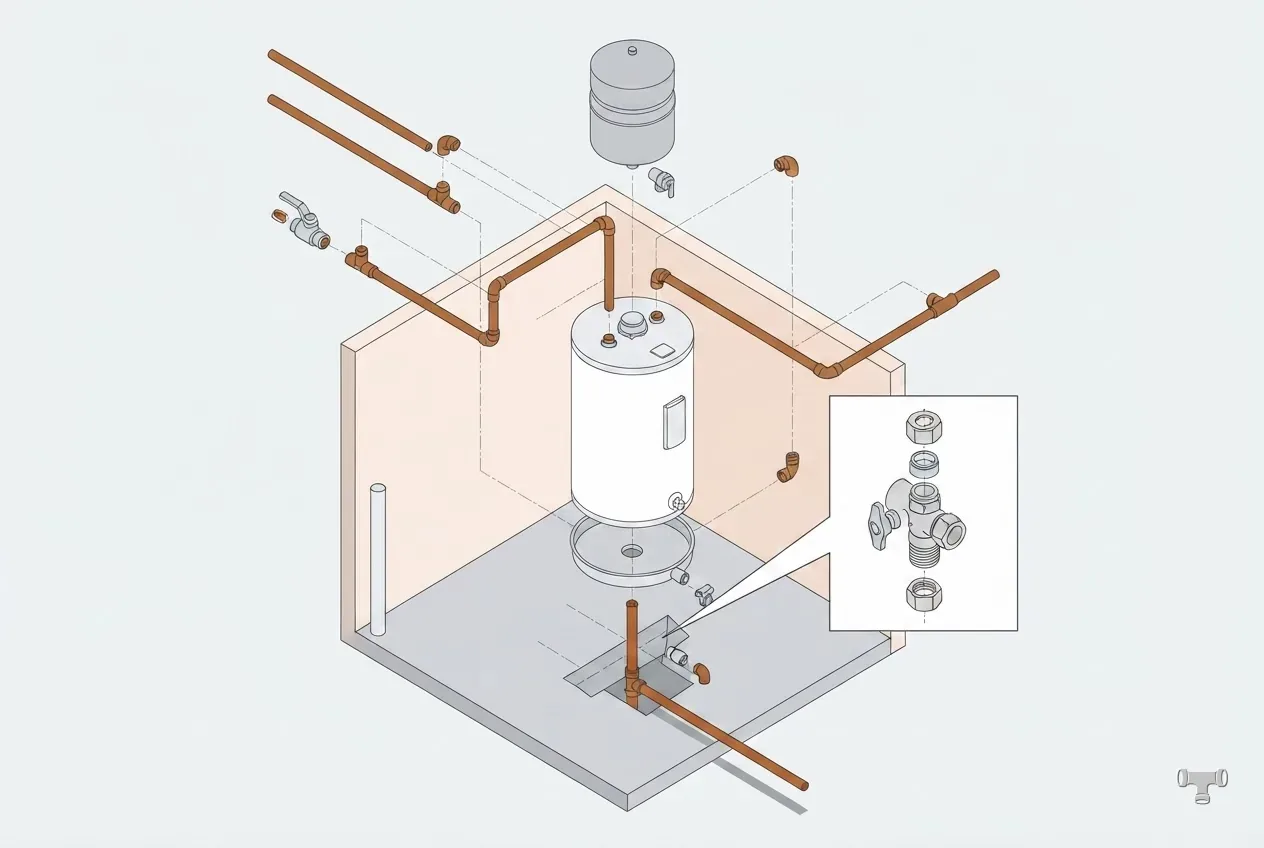
Flooring is the line customers forget
Opening a slab means removing whatever is on top of it. Tile that was discontinued, wood that cannot be feathered in, polished concrete that will never match — the plumbing repair can be modest while the floor makes the job. That is often the whole argument for rerouting overhead instead.
Put restoration in the quote as its own line, name what is being restored and to what standard, and say plainly if a perfect match is not achievable.
Ask why it leaked
Slab leaks have causes, and the cause predicts the next one. Pinhole pitting on copper points at water chemistry or stray current. Abrasion at a bend points at a pipe laid without a sleeve moving against the concrete. High static pressure accelerates all of it — check it with the pressure calculator and fit a pressure-reducing valve above 80 psi as IPC 604.8 requires.
A repair that does not address the cause is a repair you will be quoting again.
Next in the run
- Repipe cost calculatorWhen the second leak arrivesPEX · CPVC · Cu
- Leak cost calculatorWhat the loss is costing meanwhilegal/yr · USD
- Water pressure calculatorHigh pressure makes slab leaksPSI · ft head
- Repipe materialsWhat the reroute is run in2026-10-18
- How to check water pressureRule out high pressure first8 min