Drain pipe slope per foot
Updated 2026-10-18 · 8 min read
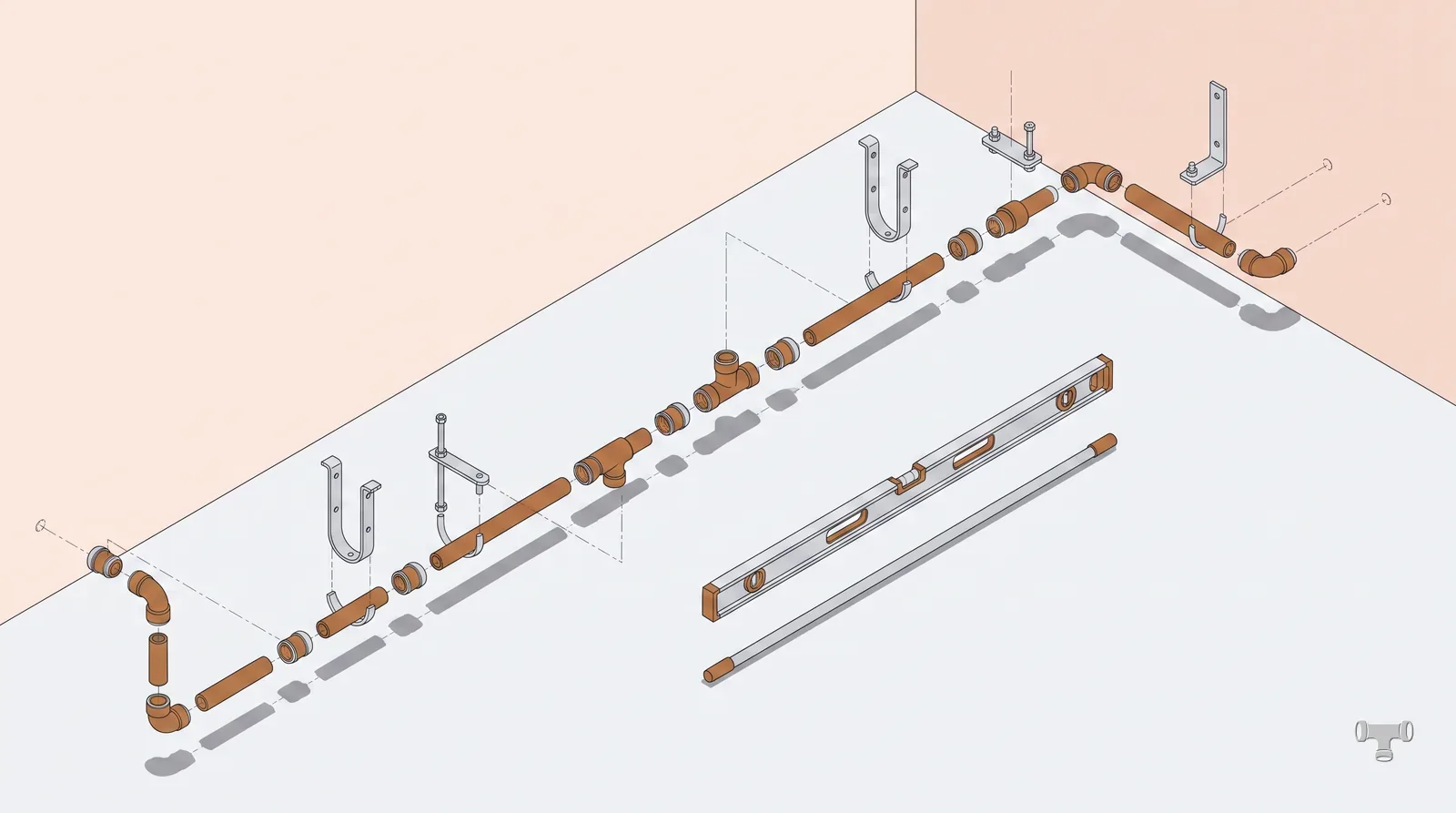
The code minimums
IPC Table 704.1 is three rows long and it is the whole of the argument. Anything 2-1/2" and under runs at least 1/4" per foot. Three through six inches runs at least 1/8". Eight inches and above runs at least 1/16". The word doing the work in the clause is uniform: uniform alignment at uniform slope.
| Pipe size | Minimum slope | As a percentage | Fall over 10 ft |
|---|---|---|---|
| 1-1/4" to 2-1/2" | 1/4" / ft | 2.08% | 2.5" |
| 3" to 6" | 1/8" / ft | 1.04% | 1.25" |
| 8" and larger | 1/16" / ft | 0.52% | 0.63" |
Minimum, not target
Why big pipe gets less slope
Solids move because the stream is deep enough to carry them, not because the pipe is tilted. At the same flow a larger pipe runs a shallower, faster-spreading stream, so the code trades slope for diameter to keep the stream moving fast enough to carry solids at every size.
That is also why a drain that is oversized for its load blocks more often than one sized correctly. A 4" line carrying one bathroom's worth of flow never develops enough depth to scour. Bigger is not safer on drainage; it is the opposite.
The too-steep myth, examined
The trade lore is that a steep drain leaves the solids behind while the water runs away. The mechanism is real on a long horizontal run at low flow, and it is why the standard advice is to hold a uniform grade rather than to chase the steepest one the joists allow.
What the lore overstates is the vertical case. A stack drops solids and water together at terminal velocity and nothing separates. The problem is horizontal, at partial flow, over distance — and in practice a belly in a nominally-1/8" run causes far more stoppages than a 1/2" grade ever does.
The real enemy is the belly
How to shoot and hold a grade
- 1
Fix both ends before anything else
Establish the invert at the connection and the invert at the far fixture. The difference over the run is your total fall, and it either fits between the joists or it does not. Find that out with a tape, not with a pipe in your hands.
- 2
Snap a line, do not eyeball hangers
Mark the high invert, mark the low invert, snap between them. Every hanger is then set to the line rather than to the one before it, which is how cumulative error turns into a belly.
- 3
Support at the code interval
Plastic DWV sags between hangers and it does so over months, not days. Support at the interval the code names for the material and add one at every change of direction.
- 4
Prove it before it is covered
A level laid on the pipe at three points along the run is thirty seconds of work and it is the last chance to find a flat spot before the ceiling goes up.
Grease is the written exception
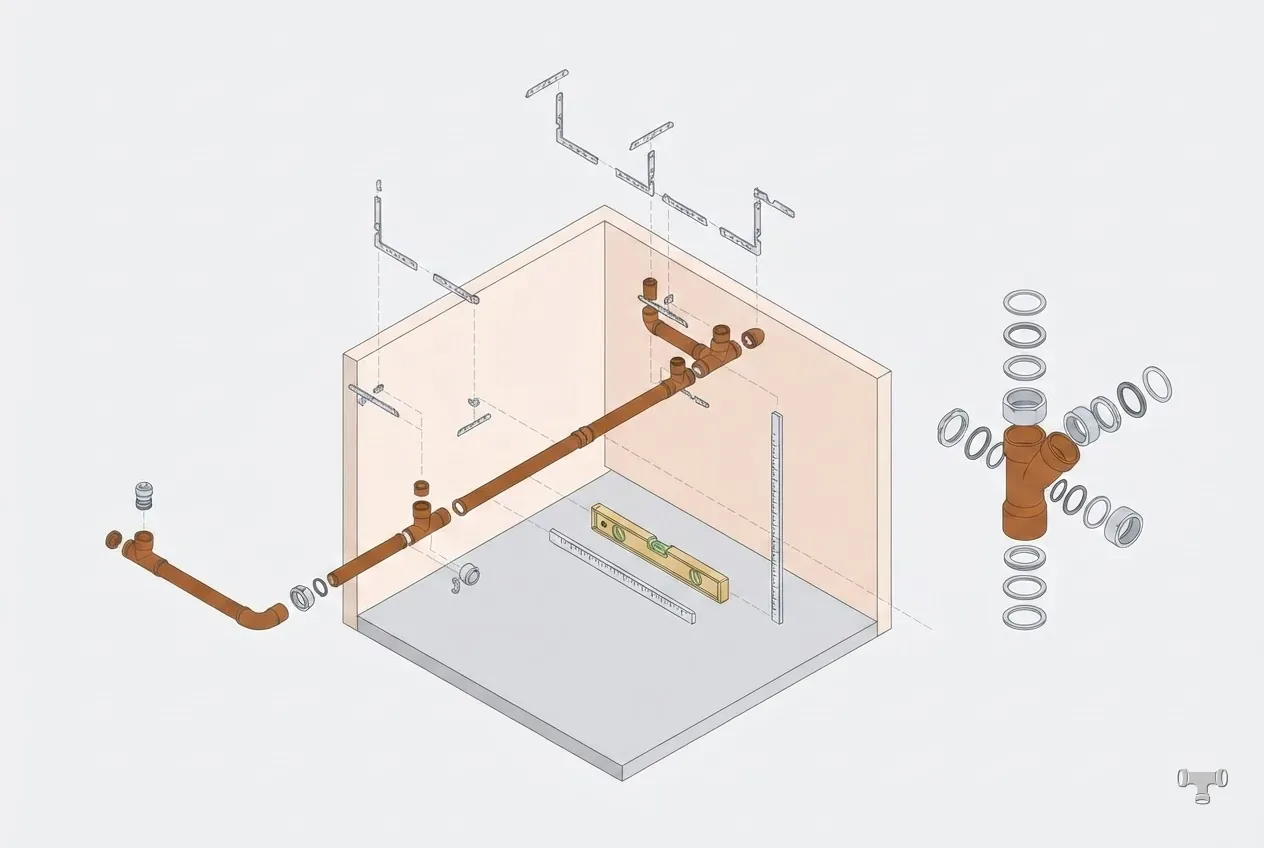
IPC 704.1 carries one explicit exception: piping upstream of a grease interceptor runs at not less than 1/4" per foot whatever its size. Grease congeals as it cools and a shallow grade gives it time to do so on the pipe wall.
On a commercial job that clause is the difference between a kitchen line that gets jetted annually and one that gets jetted quarterly. Size the run with the slope calculator with the grease box ticked and put the grade on the drawing.
Next in the run
- Drain slope calculatorFall over your run, checked against the table1-1/4"–8" · IPC 704
- Vent distance calculatorSlope drives the trap-arm limitIPC 906.1
- Plumbing vent requirementsWhy the seal breaks10 min
- Fixture units explainedThe load the slope has to carry9 min
- Sump pump sizing calculatorBelow the sewer? Pump itgpm · ft TDH