P-trapVented arm
The outlet leaves horizontally into a trap arm that reaches a vent within the distance IPC Table 909.1 permits — 6 ft for a 1-1/2" trap. Air enters behind the discharge through that vent, so no vacuum forms and the seal stays put.
Updated 2026-09-04
One turns horizontally into a vented arm; the other turns straight down. That single difference decides whether the fixture keeps its water seal after a full discharge, which is why one is required and the other is prohibited in new work.
Best overall
P-trap, vented
The only form modern codes accept, and the only one that reliably keeps its seal after a full discharge.
Best value
Reroute to a vented arm
On a wall-drained fixture the correction is usually short, and it removes the defect rather than masking it.
Best for an island sink
AAV, where permitted
The pragmatic answer where no wall is reachable — provided the AHJ allows one and it stays accessible.
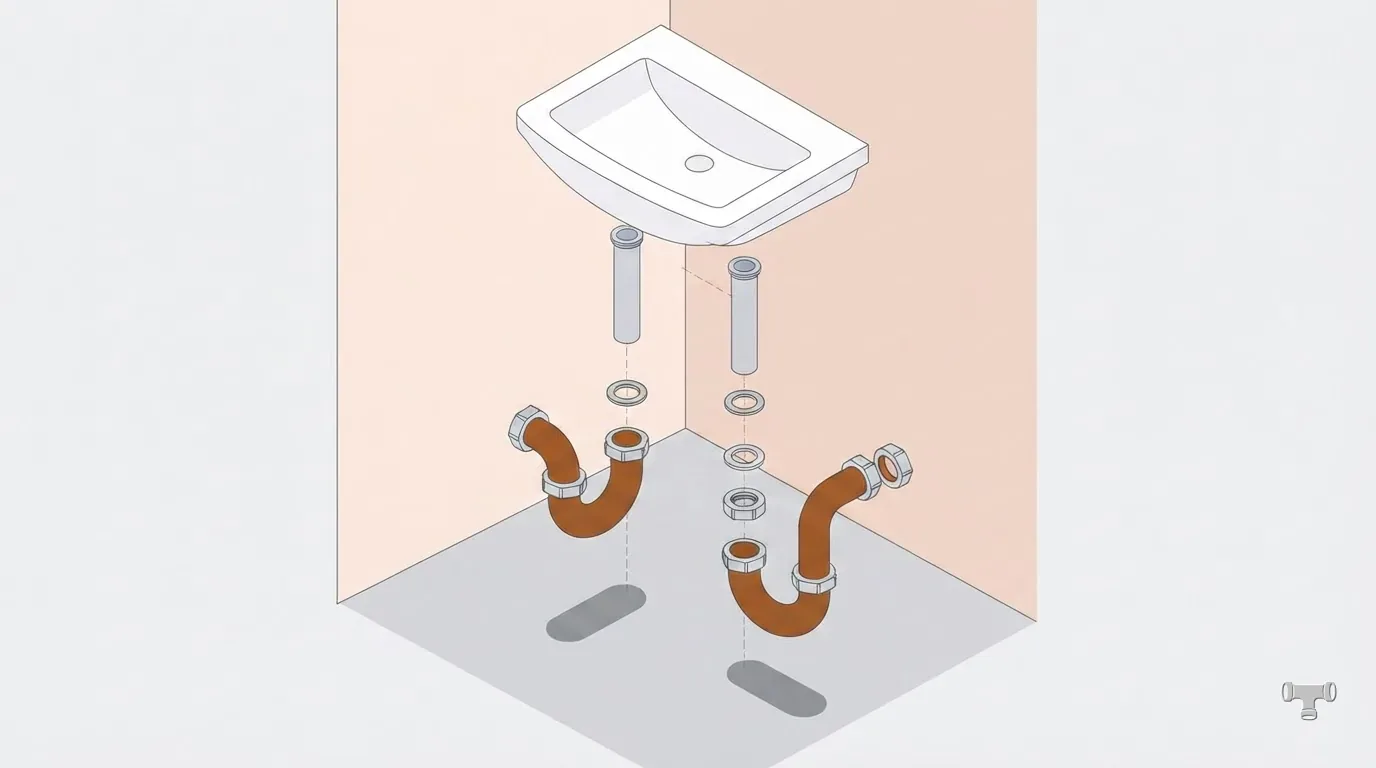
| Factor | P-trap | S-trap |
|---|---|---|
| Outlet direction | Horizontal, to a vented arm | Vertical, straight down |
| Vent relationship | Vented within the trap arm limit | Effectively unvented |
| Self-siphoning risk | Low | High — that is the defect |
| Sewer gas after a discharge | Seal retained | Seal can be pulled |
| Code status, new work | Required form | Prohibited in modern codes |
| Found in | All current work | Older houses, unpermitted work |
| Typical fix | — | Reroute to a vented arm, or an AAV where permitted |
Code violation
The outlet leaves horizontally into a trap arm that reaches a vent within the distance IPC Table 909.1 permits — 6 ft for a 1-1/2" trap. Air enters behind the discharge through that vent, so no vacuum forms and the seal stays put.
The outlet turns straight down. A full discharge fills that vertical leg, and the falling column acts as a piston pulling everything behind it — including the water that was sealing the trap. The basin gurgles, the seal drops, and sewer gas has a path into the room.
The clean fix is to reroute the drain so the trap outlet leaves horizontally into an arm that reaches a vent — check the distance and the one-pipe-diameter fall rule on the vent distance calculator. On a wall-drained sink that is often a short piece of work.
Where the drain is in the floor and there is no wall to move to — an island sink, a converted space — an air admittance valve is the usual answer, subject entirely to whether your authority having jurisdiction (AHJ) permits one. Ask before you fit it, and keep it accessible.
When you find an S-trap