Tankless water heater cost
Updated 2026-10-18 · 10 min read
The installed band, and why it splits
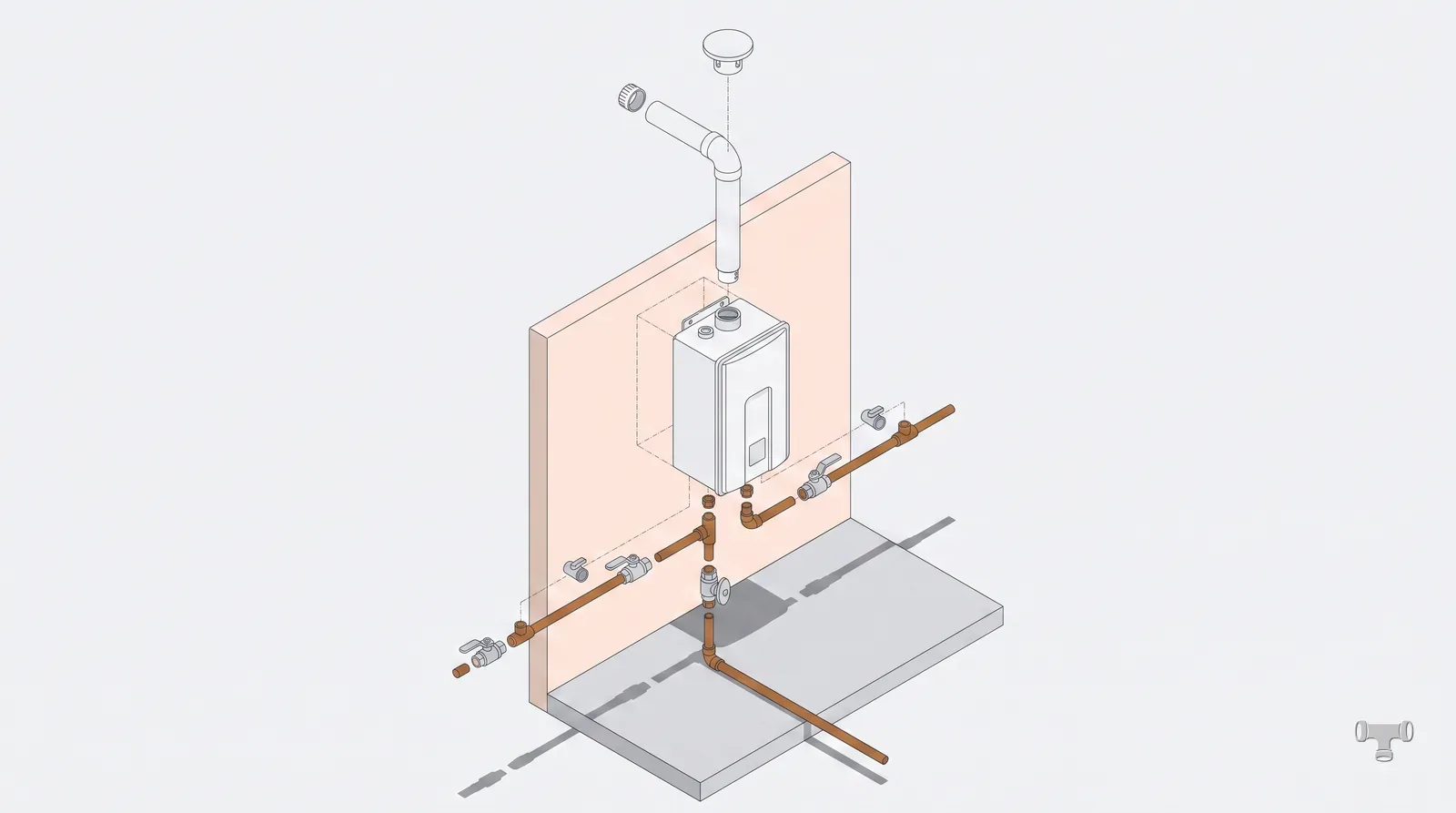
Tankless pricing does not form a single band. It forms two, and which one you land in is decided before anyone opens a box: whether the existing gas line and vent can serve the new unit, or whether both have to change.
| Scenario | Unit | Extra work | Hours |
|---|---|---|---|
| Tankless-to-tankless replacement | $900–2,400 | $0–300 | 4–7 |
| Tank to tankless, gas and vent OK | $900–2,400 | $300–900 | 6–10 |
| Tank to tankless, gas upsize needed | $900–2,400 | $650–2,300 | 8–14 |
| Tank to tankless, new vent run | $900–2,400 | $900–4,000 | 10–18 |
| Electric tankless, whole house | $500–1,400 | service upgrade | varies |
Electric whole-house is a service question
The gas line is the first gate
A tank heater draws around 40,000 BTU/h. A whole-house gas tankless draws 150,000 to 199,000. That is not a small increase — it usually pushes the total connected load past what the existing pipe carries at the run length. Under the longest-length method (IFGC 2024 §402.4.1) every section is sized on the load it carries, read at the length to the most remote outlet, so the main from the meter takes the whole increase.
Run the numbers before you promise anything: the gas pipe size calculator takes the connected load and the longest run and returns the size each section needs. If the answer is one size up from what is there, the pipe from the meter changes.
The vent is the second
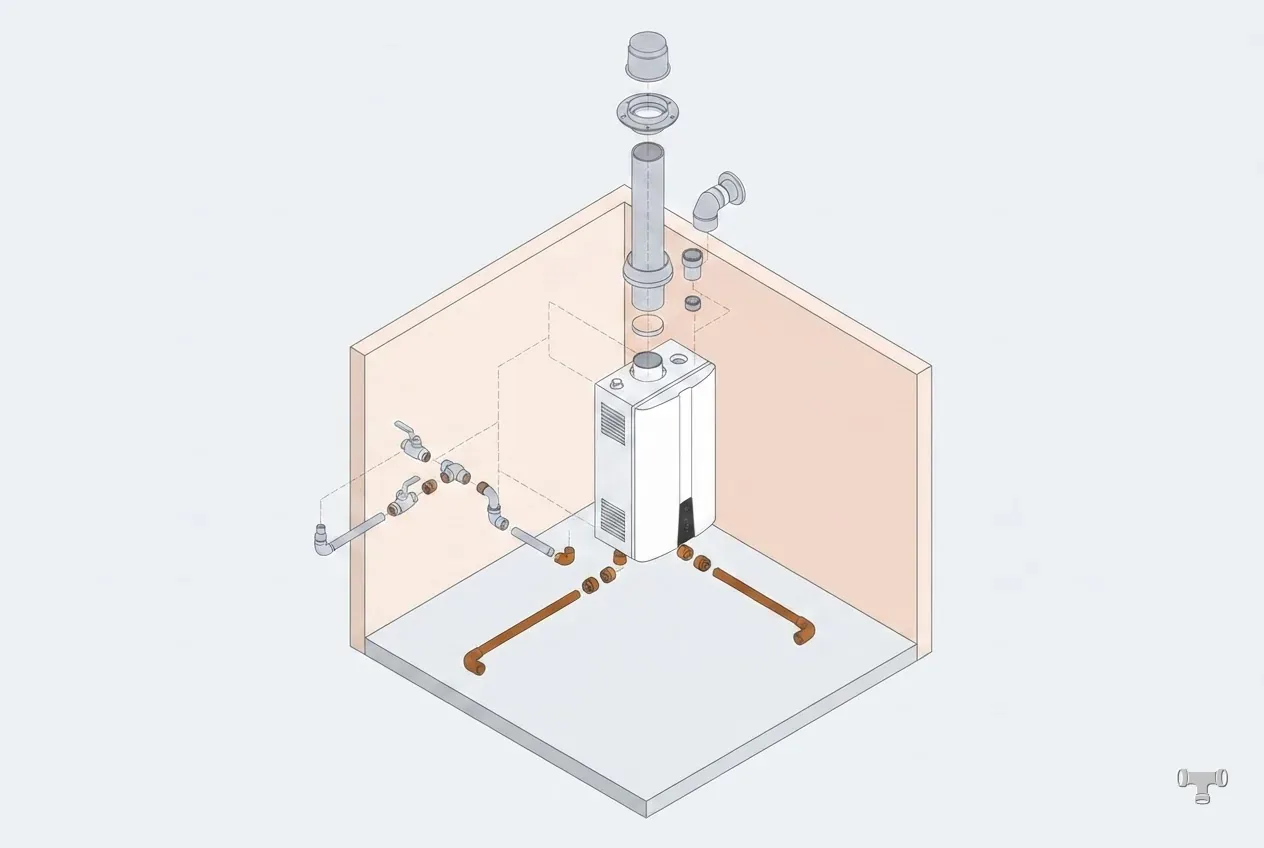
A condensing tankless produces acidic condensate and cool exhaust, so it vents in PVC or polypropylene, usually horizontally through a sidewall, and it needs a condensate drain or a neutraliser. A non-condensing unit vents hot in stainless category III, which is expensive per foot and cannot share a chimney with anything else.
Neither reuses a masonry chimney that served an atmospheric tank. Assume a new vent path unless you have looked at the wall it is going through.
The payback arithmetic, honestly
The saving is standby loss: a tank reheats water nobody used. That is real and it is modest — a well-insulated modern tank loses far less than the tanks the tankless sales pitch was written against. Against an install premium that routinely runs one to three thousand dollars, simple payback on energy alone frequently exceeds the warranty. That term differs by maker, and on a recirculation loop by how the pump is controlled: compare the water heater brands before quoting one.
The honest reasons to fit one are the non-energy ones: endless hot water, twenty years of service life against ten to twelve, and a footprint you get back. Sell those. A payback claim built on a number nobody measured is the line that comes back in a review.
Maintenance is part of the total
Size it at your rise, not theirs
Every tankless flow rating is quoted at a temperature rise. The same unit that shows 9 gpm at a 35 °F rise shows roughly 4 gpm at 75 °F. Incoming water temperature is a climate fact, and in the north it is the fact that decides whether two showers can run at once.
Work out the real requirement first with the sizing calculator, then read the manufacturer's flow chart at that rise. A unit sized off the box headline is a callback in February.