Garbage disposal installation cost
Updated 2026-09-04 · 7 min read
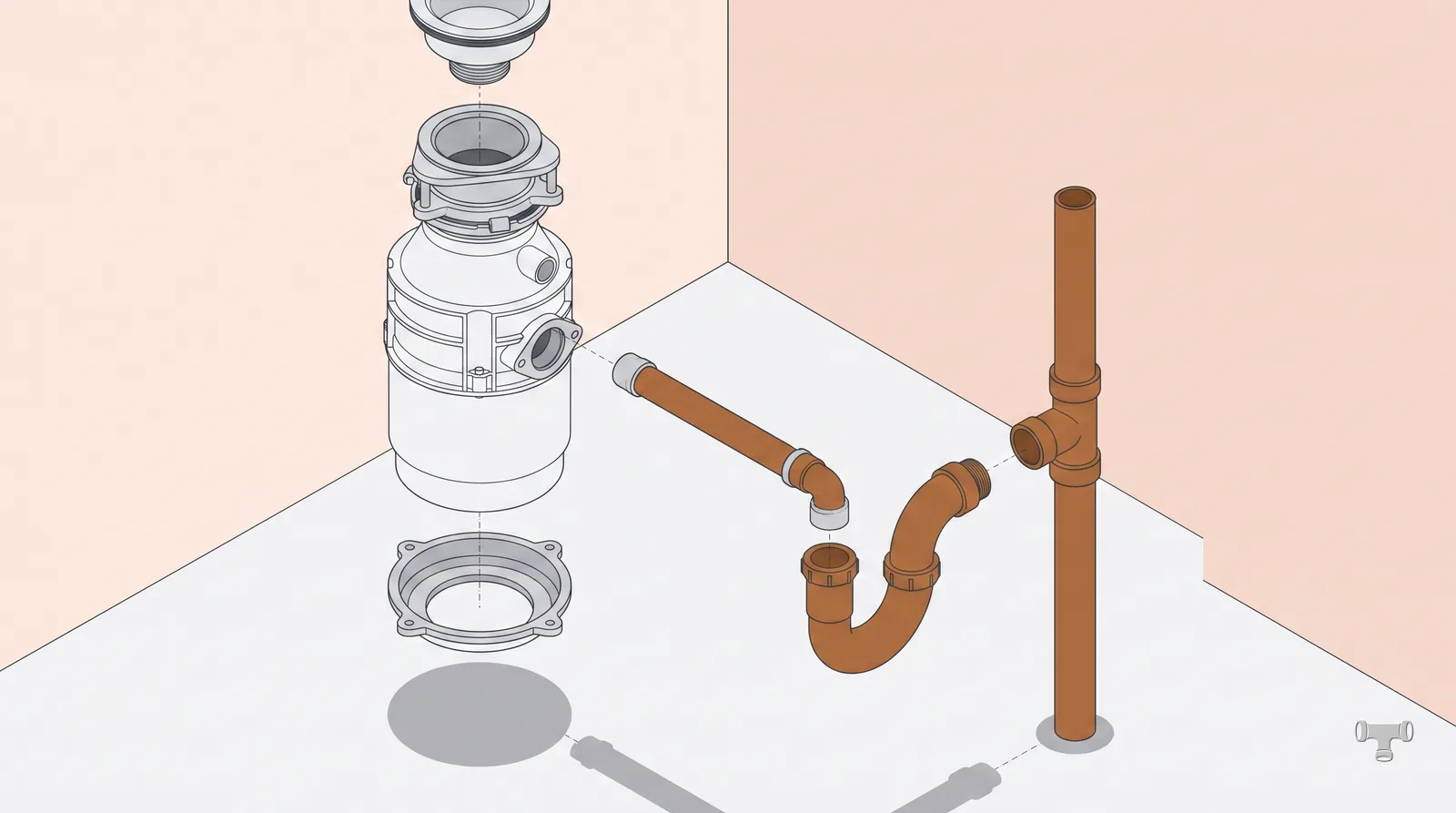
Swap versus first install
Replacing a disposal that is already there is one of the shortest paid jobs in the trade. Putting one where there has never been one is three trades in a cupboard, and the price reflects it.
| Scenario | Unit | Hours | Extras |
|---|---|---|---|
| Like-for-like swap, same mount | $90–350 | 0.75–1.5 | None |
| Swap, different mount ring | $90–350 | 1–2 | New flange, plumber's putty |
| First install, outlet present | $90–350 | 1.5–3 | Tailpiece rework, trap re-set |
| First install, no outlet | $90–350 | 2–3 | Electrician: switched circuit |
| With dishwasher tie-in | add $0–40 | add 0.25 | Knock-out plug, high loop or air gap |
The knock-out plug
The electrical line is not yours
A disposal needs a dedicated switched circuit or a properly rated receptacle under the sink. Where none exists, that is an electrician's job with its own permit in most jurisdictions, and it is frequently more than the disposal.
Say so in the quote rather than discovering it on site. "Assumes an existing switched outlet under the sink" is one line that prevents an entire argument.
What changes under the sink
A disposal sits lower than a basket strainer and it discharges sideways. That usually means the tailpiece is shortened, the trap arm is re-cut and the P-trap moves down. On a double bowl with a centre outlet the continuous waste often has to be rebuilt entirely.
None of that is difficult and all of it is time. Check the trap arm still meets the vent distance limit afterwards — dropping the trap changes the fall over the arm, and the vent distance calculator has the one-pipe-diameter rule in it.
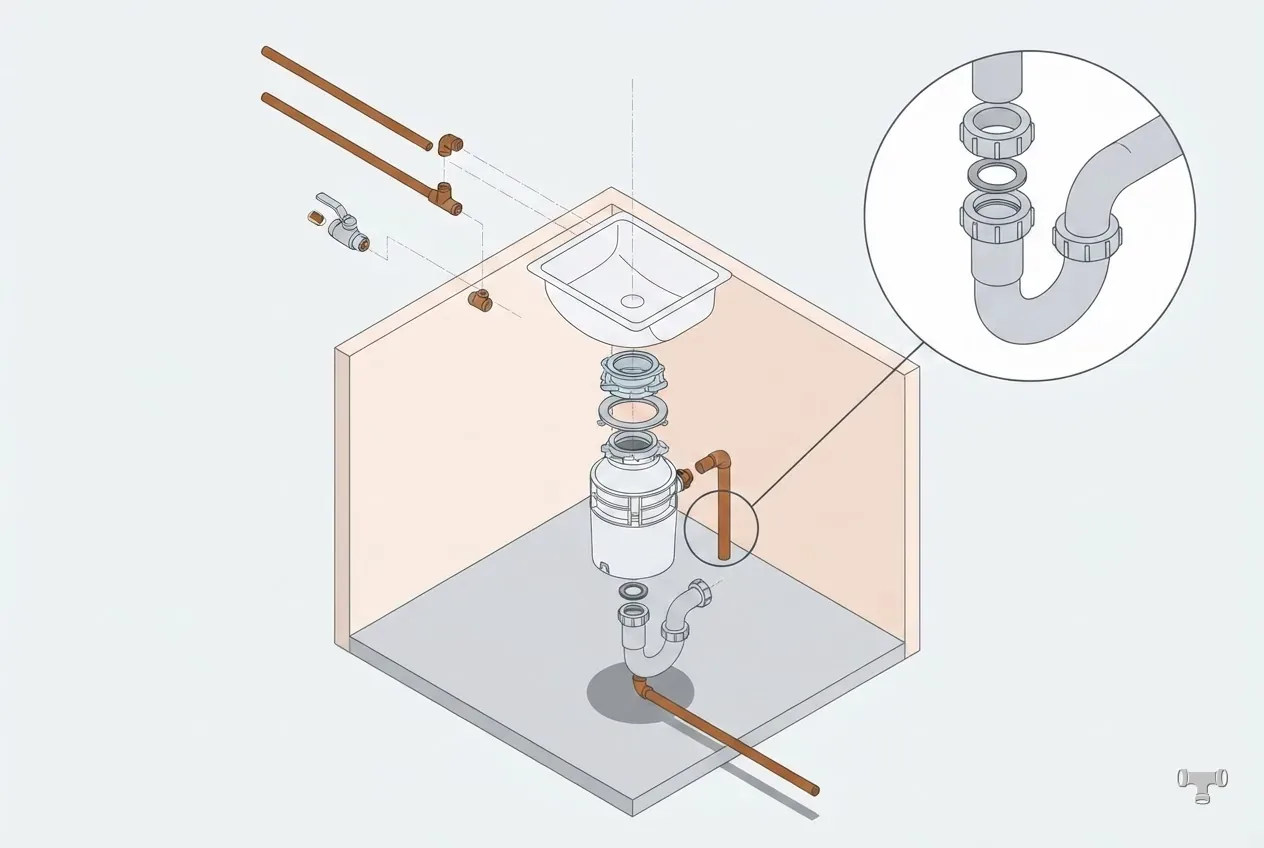
High loop or air gap
The dishwasher drain hose has to be protected against backflow from the sink. Some jurisdictions require a countertop air gap fitting; others accept a high loop fastened under the counter. Which one applies is a local answer, and doing the wrong one is a failed final inspection on an otherwise finished kitchen.
Ask the authority having jurisdiction (AHJ) before the counter is drilled, because retro-fitting an air gap means a hole in a stone worktop.
Choosing the unit
Horsepower is the headline and grind stages are the substance. A 1/3 hp unit is genuinely underpowered for a household that cooks; 1/2 to 3/4 hp covers almost everything. Continuous feed is standard; batch feed exists for households with small children and costs more for the interlock, not for the motor.
Stainless grind components matter more than the amperage on the label. That is the part that decides whether the unit is still quiet in year six.
Next in the run
- Vent distance calculatorRe-check the arm after the trap dropsIPC 906.1
- How to unclog a drainThe kitchen line, in escalation order9 min
- P-trap vs S-trapWhat is under there already2026-09-04
- Job price calculatorPrice the hours at your own rateFlat rate · %
- Drain cleaning costWhen the line still clogs7 min