Plumbing fixture units explained
Updated 2026-10-18 · 9 min read
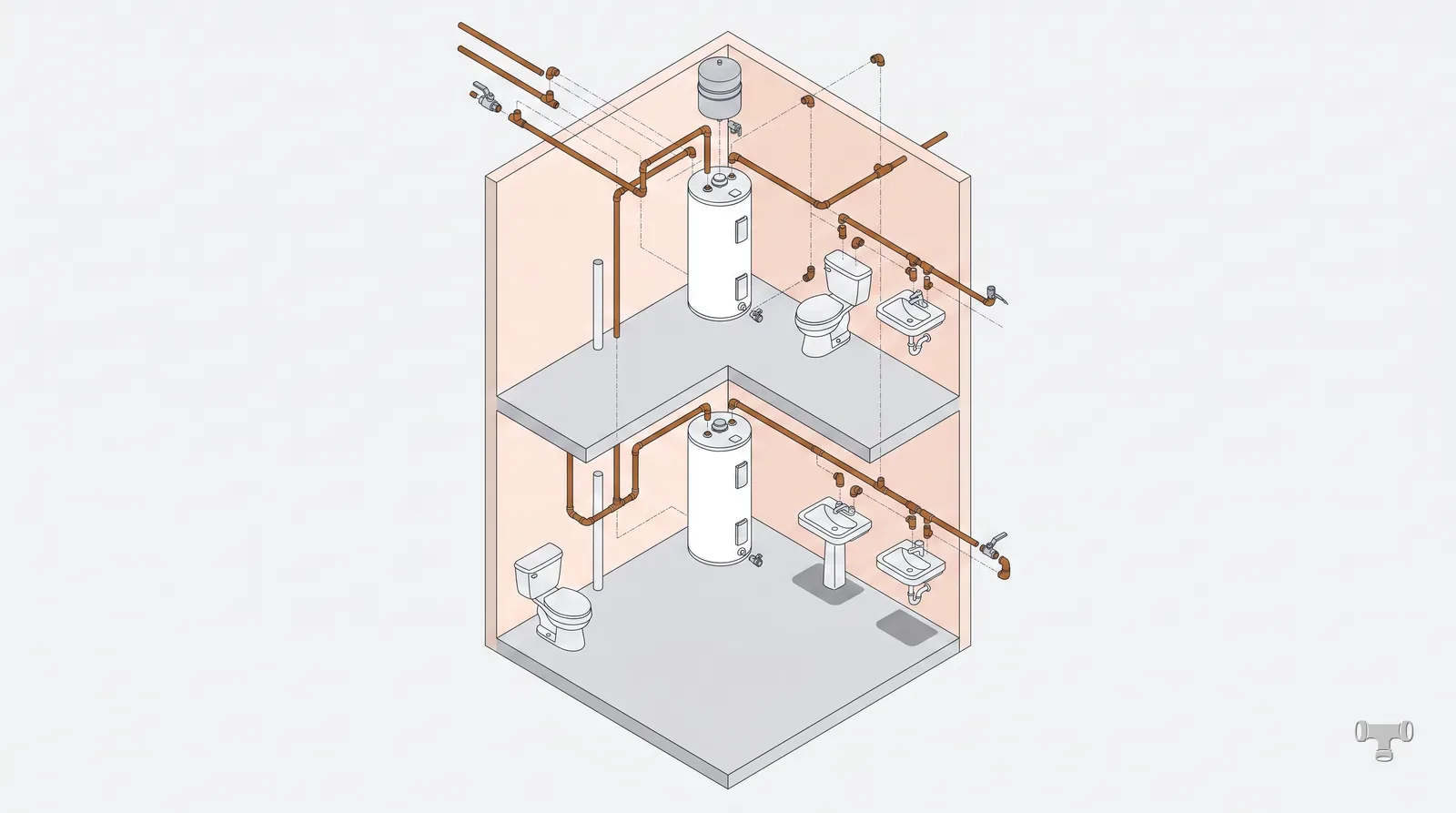
Two units, one word
"Fixture units" is two different measurements wearing one name. A water supply fixture unit (WSFU) weights how hard a fixture pulls on the supply. A drainage fixture unit (DFU) weights how much it dumps into the drain. The same lavatory is 0.7 WSFU and 1 DFU, and the two numbers are not convertible.
Neither is a flow rate. A fixture unit is a weighting invented so that a building full of fixtures can be sized without pretending they all run simultaneously — which is exactly what would happen if you added up gallons per minute.
Never write the number without the prefix
WSFU and the simultaneity problem
Sum the WSFU of every fixture and you have a demand weight, not gallons. Hunter's curve converts that weight into a probable peak flow, and the curve is deliberately non-linear: doubling the fixtures does not double the flow, because the probability that all of them run at once falls as the count rises.
| Fixture | Cold | Hot | Combined |
|---|---|---|---|
| Water closet, flush tank | 2.2 | — | 2.2 |
| Lavatory | 0.5 | 0.5 | 0.7 |
| Bathtub or tub/shower | 1.0 | 1.0 | 1.4 |
| Shower, separate | 1.0 | 1.0 | 1.4 |
| Kitchen sink | 1.0 | 1.0 | 1.4 |
| Dishwasher | — | 1.4 | 1.4 |
| Clothes washer | 1.0 | 1.0 | 1.4 |
| Hose bibb | 2.5 | — | 2.5 |
The hot and cold columns do not add to the combined figure. A shower cannot draw both at full rate at once, so the code assigns a combined value below the sum. Use the branch figures on the branches and the combined figure on the trunk.
DFU and what the drain actually sees
Drainage fixture units count discharge, and the ratios are different because the physics is different. A water closet is the heaviest fixture on the drain at 3 DFU and one of the lighter ones on supply relative to a hose bibb. The bibb, which is 2.5 WSFU, contributes 0 DFU — it discharges to grade.
| Fixture | DFU | Minimum trap |
|---|---|---|
| Water closet, 1.6 gpf | 3 | 3" |
| Lavatory | 1 | 1-1/4" |
| Bathtub or tub/shower | 2 | 1-1/2" |
| Shower, separate | 2 | 1-1/2" |
| Kitchen sink | 2 | 1-1/2" |
| Clothes washer standpipe | 2 | 2" |
| Floor drain | 2 | 2" |
A worked house
Two full bathrooms, a kitchen, a laundry and two hose bibbs. On the supply side that is two water closets at 2.2, two lavatories at 0.7, two tub/showers at 1.4, a kitchen sink and a dishwasher at 1.4 each, a washer at 1.4 and two bibbs at 2.5 —17.8 WSFU.
On the drainage side the same house is two closets at 3, two lavatories at 1, two tubs at 2, sink and dishwasher at 2 each and a washer at 2 — 18 DFU. The totals happening to land close together is a coincidence of this house, not a rule.
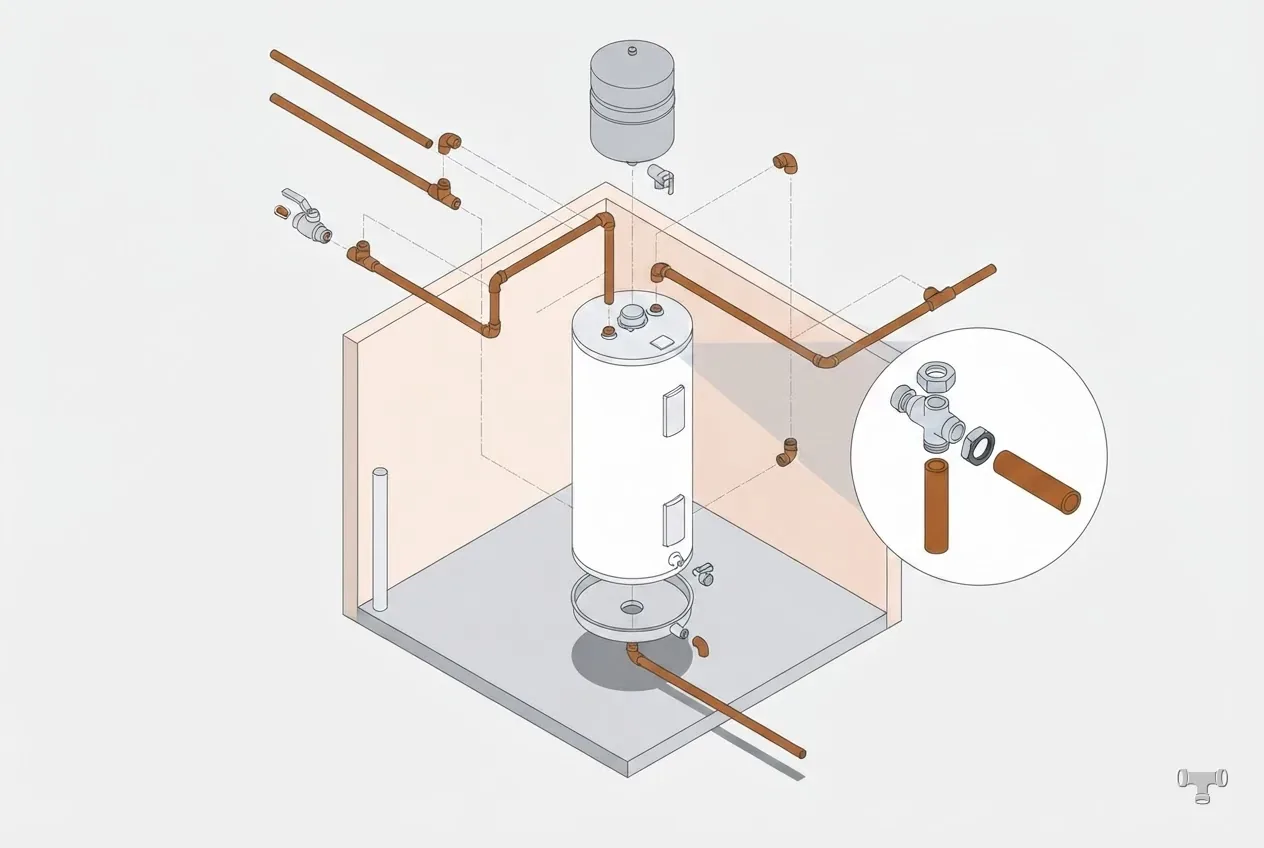
About 18 WSFU reads as roughly 19 gpm on the flush-tank curve; 18 DFU sits comfortably inside a 3" building drain at 1/8" per foot, which IPC Table 710.1(1) rates at 36 DFU. Both numbers fall out of the fixture unit calculator if you would rather count with buttons.
The codes do not agree
IPC and UPC publish different fixture unit schedules. Several fixtures carry different weights, and the UPC counts some fixtures the IPC does not. A total computed on one schedule is not submittable to a jurisdiction that adopted the other.
Establish which code your authority having jurisdiction (AHJ) adopted before you total anything — the IPC vs UPC comparison covers where the two diverge on a house.
Next in the run
- Fixture unit calculatorCount fixtures, get both totalsWSFU · DFU
- Pipe size calculatorWhere the WSFU total goes next1/2"–2" · IPC 604
- Drain slope calculatorWhere the DFU total goes next1-1/4"–8" · IPC 704
- IPC vs UPCWhy the schedules differ2026-09-04
- Sump pump sizing calculatorSizing water you pump outgpm · ft TDH