How pipe size is measured
Updated 2026-10-18 · 7 min read
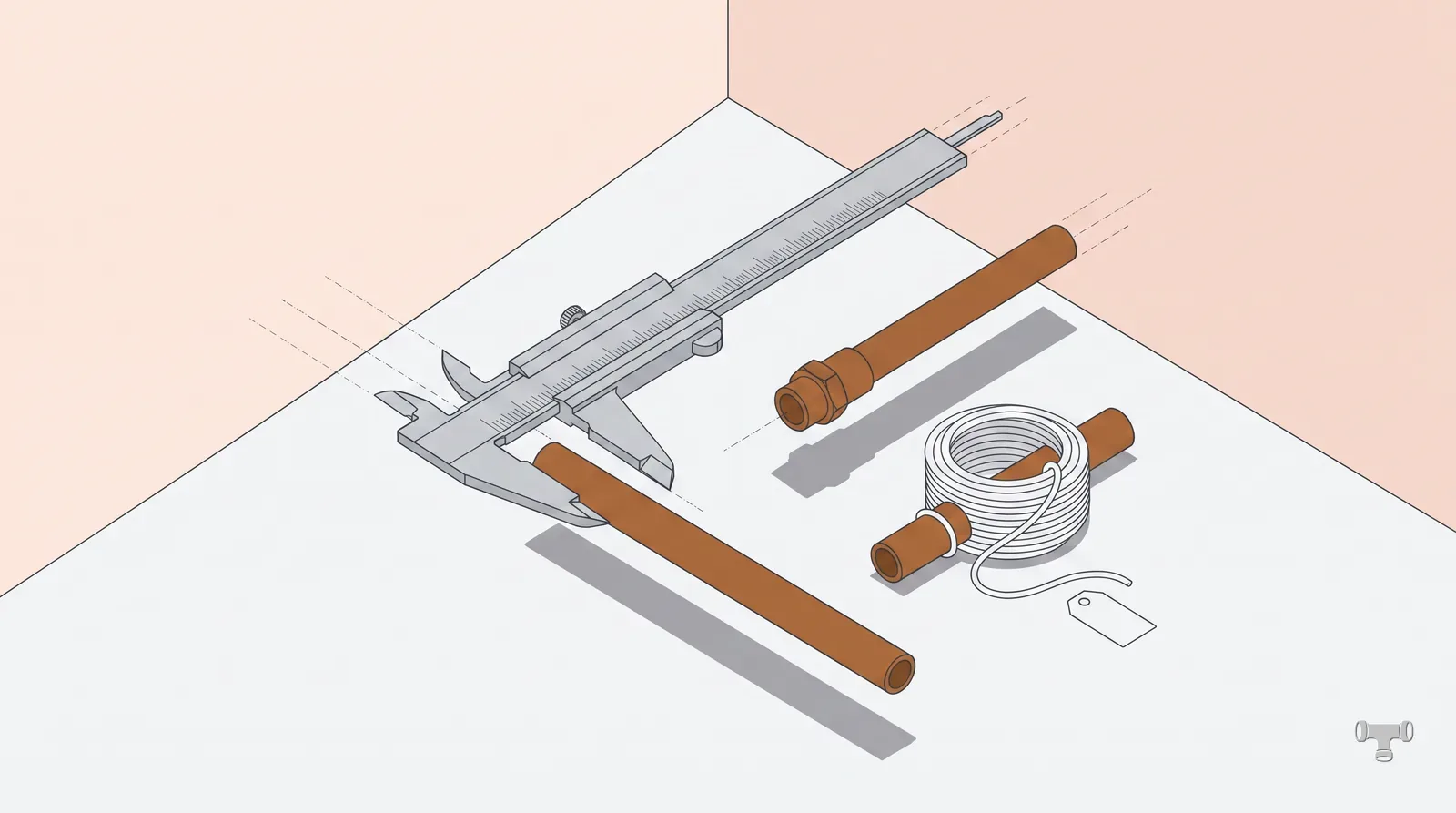
Measure the outside, not the bore
You cannot measure a nominal size, because it is not a dimension. What you can measure is the outside diameter, and every naming system maps it back. In copper tube size the rule is simple enough to hold in your head: the outside diameter is the nominal size plus 1/8". A tube that measures 0.875" is a 3/4" line.
Iron pipe size does not follow that rule and needs the table. A pipe measuring 1.050" is 3/4" steel — the same nominal name, 0.175" bigger across than the copper line.
PEX and CPVC are copper tube size
Three ways to take the measurement
- 1
Calipers, if the end is exposed
Jaws across the outside, square to the axis. Take it twice at 90 degrees — an old line dented by a wrench reads oval, and the larger of the two is the honest one. Two decimal places is enough.
- 2
String, when the pipe is in a wall
Wrap a string once around, mark the overlap, measure the length and divide by 3.1416. A 2.75" circumference is a 0.875" OD, so a 3/4" copper line. This is the field method that works with one hand in a joist bay.
- 3
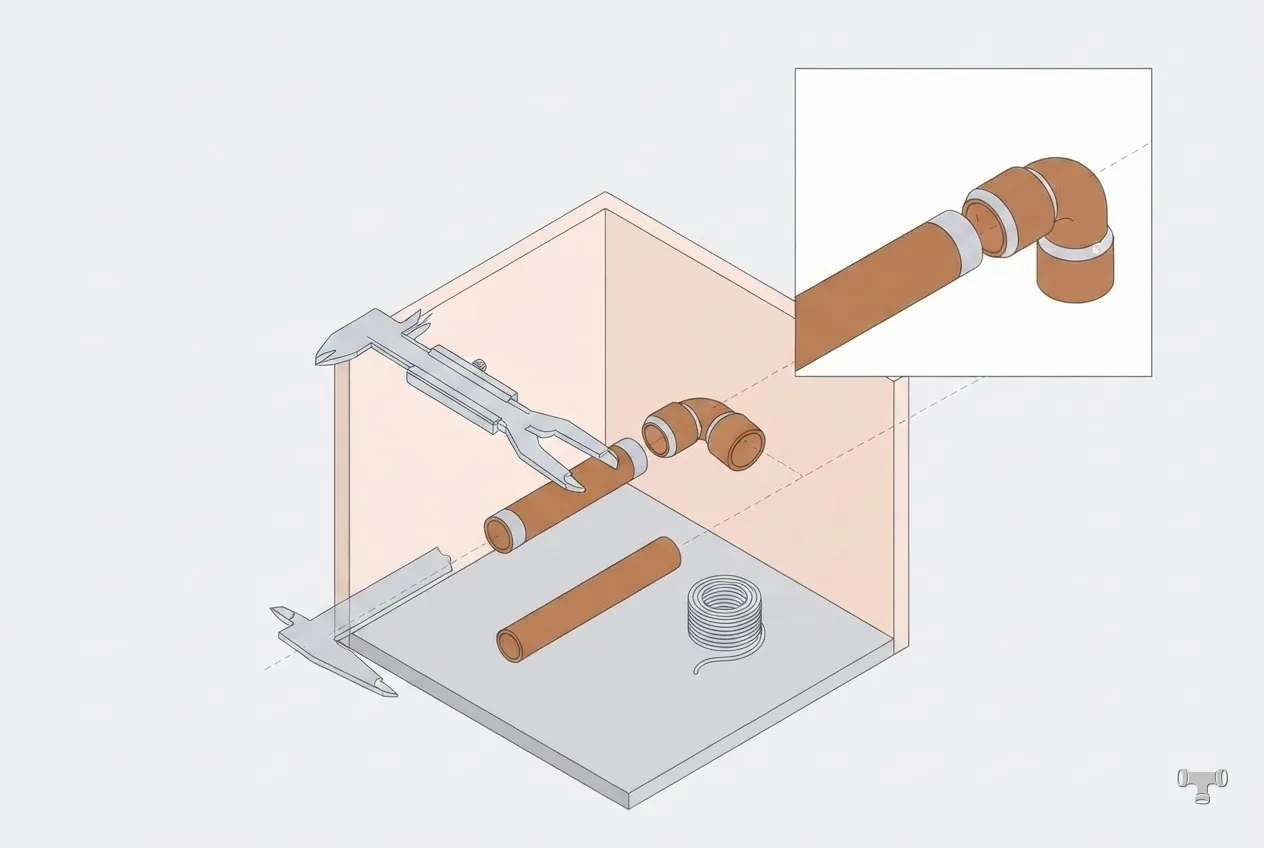
A fitting, when neither is possible
Slip a known coupling over the pipe. If a 3/4" copper coupling goes on, it is 3/4" copper. Cheap, definitive, and it tells you the material at the same time.
Reading the OD back to a size
| Measured OD | If CTS (copper, PEX, CPVC) | If IPS (steel, PVC) |
|---|---|---|
| 0.625 | 1/2" | — |
| 0.840 | — | 1/2" |
| 0.875 | 3/4" | — |
| 1.050 | — | 3/4" |
| 1.125 | 1" | — |
| 1.315 | — | 1" |
| 1.375 | 1-1/4" | — |
| 1.660 | — | 1-1/4" |
| 1.625 | 1-1/2" | — |
| 1.900 | — | 1-1/2" |
| 2.125 | 2" | — |
| 2.375 | — | 2" |
Notice how the two columns interleave. A measurement of 1.050" is unambiguous — no CTS size lands there — but 1.375" and 1.315" are close enough that a careless read swaps a copper 1-1/4" for a steel 1". Material first, then size.
Where it goes wrong
Insulation is the commonest error: a foam sleeve adds three-quarters of an inch and turns a 1/2" line into an imaginary 1-1/4" one. Strip it back before you measure.
The second is measuring a fitting instead of a pipe. A coupling, an elbow or a solder cup is always larger than the tube it joins. Measure on the straight, at least two inches from any joint.
Old galvanised reads oversize