Frozen pipes: what to do
Updated 2026-09-04 · 9 min read
What actually bursts a pipe
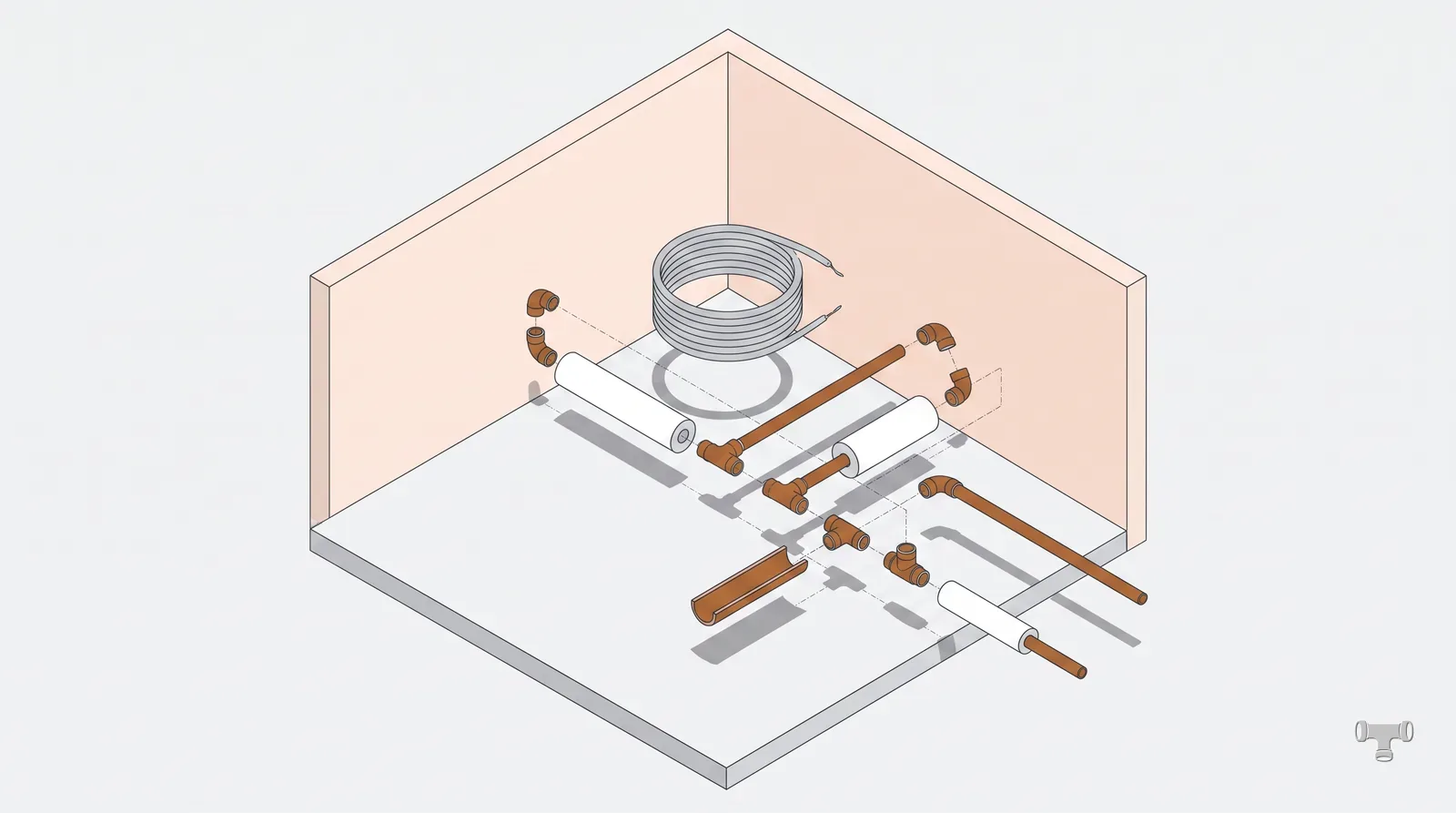
Ice does not split a pipe by pushing outward at the ice. Water expands as it freezes, and the ice plug that forms first then acts as a stopper: the water trapped between that plug and a closed tap has nowhere to go, and pressure builds in that trapped section until something gives. The split is usually downstream of the ice, not at it.
That is why opening the tap matters. It gives the trapped water an exit and removes the pressure that does the damage, and it tells you the moment flow returns.
No flow at one tap only
The thaw sequence
- 1
Open the tap that is dry
Both handles. Leave it open. It relieves pressure and it is how you will know the ice has moved.
- 2
Find the shutoff before you start
If the pipe has already split, the water arrives the moment the ice thaws. Know where the valve is and that it turns.
- 3
Apply heat from the tap end backwards
Work from the fixture toward the freeze so meltwater has somewhere to go. Heating the middle first traps water on both sides of an ice plug.
- 4
Use gentle, controlled heat
A hair dryer, a heat gun on low, warm towels, or a space heater aimed at the cavity. Time and patience, not intensity.
- 5
Keep going until full flow returns
A trickle means the plug is still mostly there. Stop early and it refreezes overnight, usually worse.
- 6
Check the whole run afterwards
A split may not leak until pressure is restored. Watch the run and the ceiling below it for an hour.
No open flame, ever
Prevention by where the pipe is
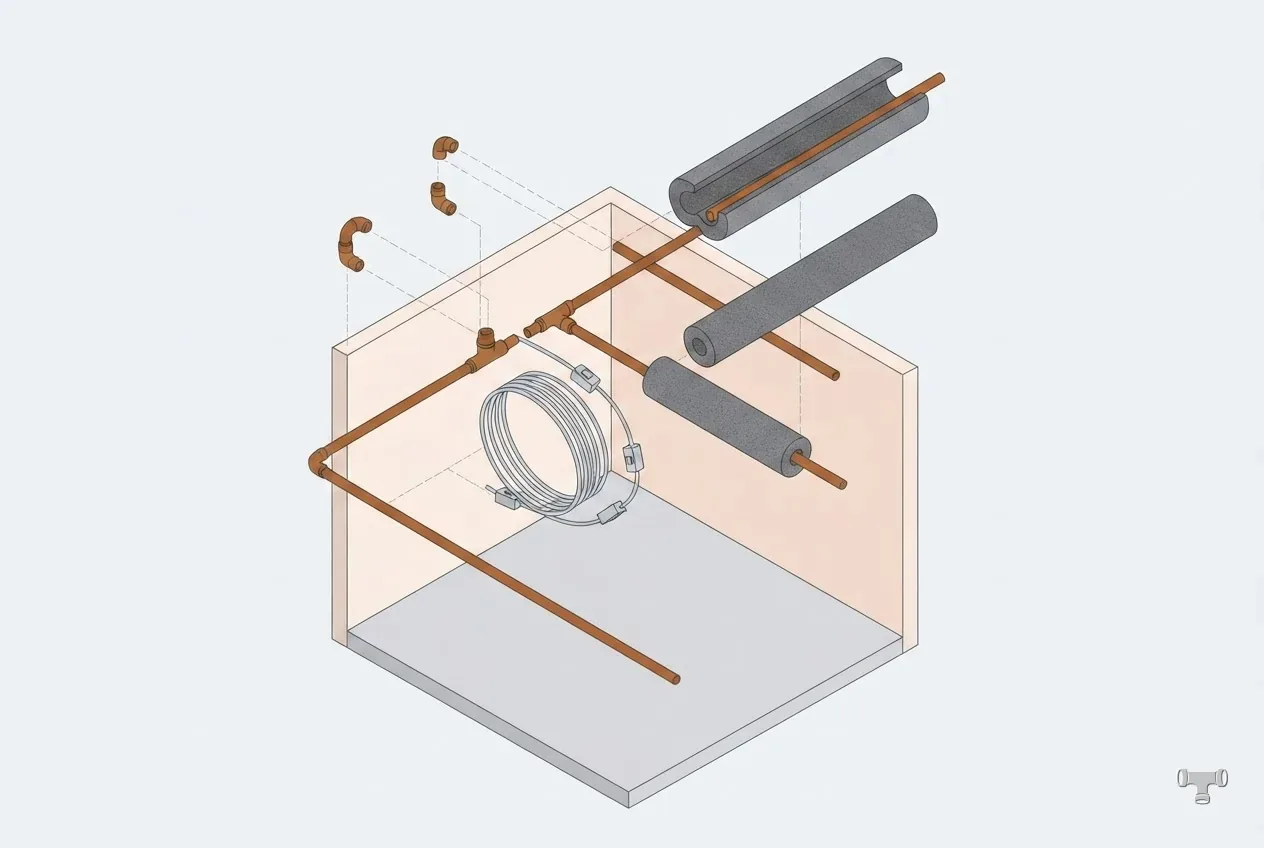
Pipes freeze where they are cold and still, so prevention is about location before it is about insulation. Ranked by how much they buy:
| Measure | Works because | Best for |
|---|---|---|
| Move the pipe inside the envelope | It is no longer in a cold space | Any renovation touching that wall |
| Seal the air leaks around it | Wind-driven cold is the usual culprit | Rim joists, sill plates, cable penetrations |
| Insulate the pipe | Slows the loss, does not stop it | Crawlspaces, unheated basements |
| Heat cable with a thermostat | Adds heat where there is none | Runs that cannot be moved |
| Let a tap drip | Moving water is much harder to freeze | Extreme cold, as a temporary measure |
| Open cabinet doors | Room air reaches the pipes | Sinks on exterior walls |
Leaving the house empty
Two strategies, and mixing them is what goes wrong. Either heat the house — thermostat no lower than the mid-fifties, interior doors open, cabinets open — or drain it: water off at the main, every fixture opened from the top of the house down, the water heater drained, and traps protected with plumbing antifreeze.
A house left at 45 °F with the water on and nobody in it is the case that produces the large insurance claims. Pick one strategy and complete it.
After a burst
Water off at the main first, then power off to any affected circuit, then photograph everything before anything is moved — the insurer will ask. Only then start the drying, because standing water in a floor cavity is a mould claim on top of a plumbing one.
When the repair is quoted, ask why that section froze. A pipe that froze once in a cold snap will freeze again in the next one unless the reason changed. That is a wall to open, an air leak to seal, or a run to move — not a length of pipe to replace.
Next in the run
- Leak cost calculatorWhat a post-thaw drip costsgal/yr · USD
- Rough-in dimensionsKeeping pipe inside the envelope9 min
- Shower valve replacementThe exterior-wall valve problem10 min
- Repipe cost calculatorWhen a run has to movePEX · CPVC · Cu
- Jet pump vs submersible well pumpSurface pumps freeze first2026-10-18