Backflow preventer requirements
Updated 2026-09-04 · 9 min read
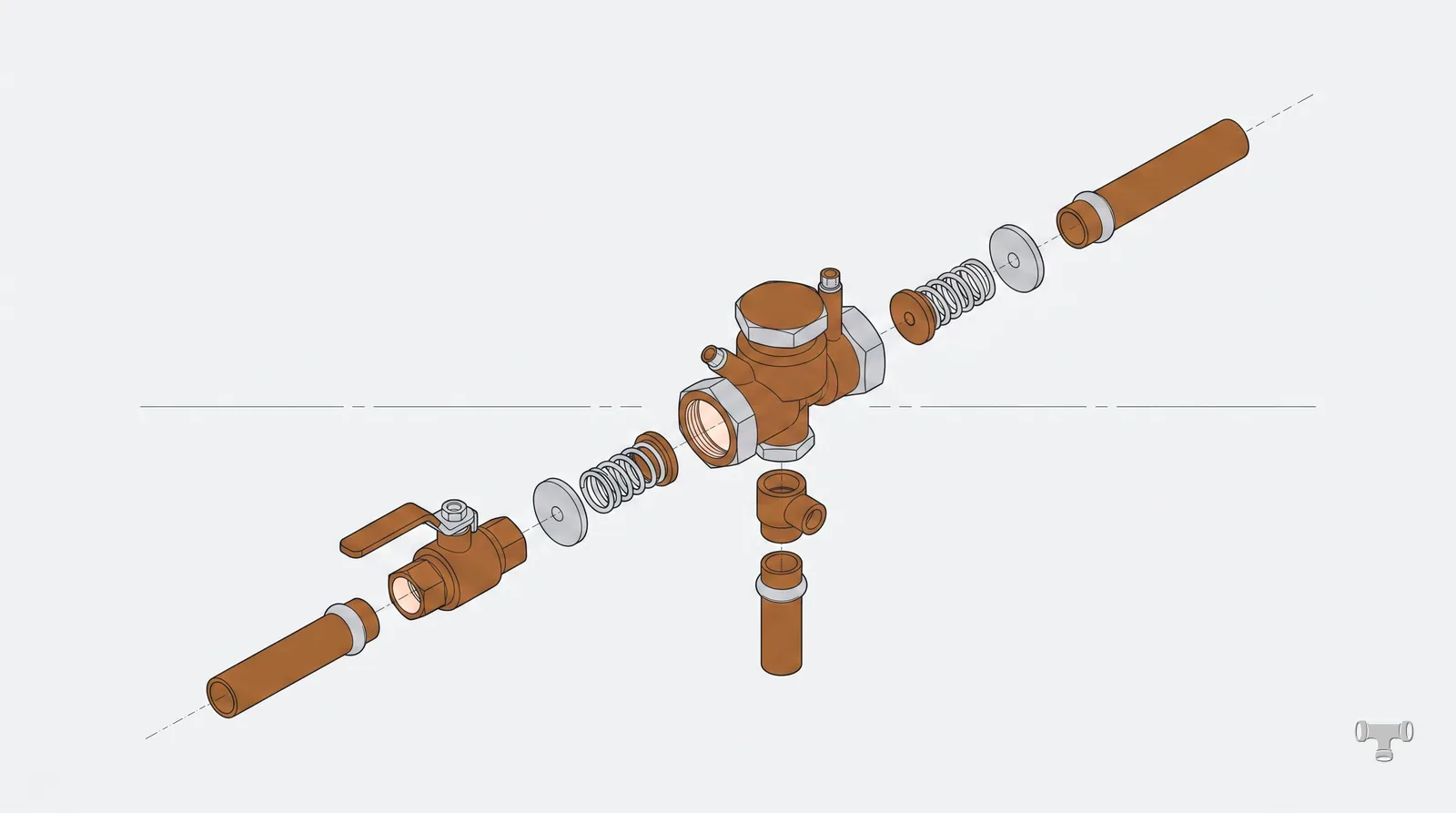
Two ways water goes backwards
Backflow is potable water reversing direction and carrying something with it. Back-siphonage happens when supply pressure drops — a main break, a fire flow — and the system pulls from whatever is connected downstream. Back-pressure happens when the downstream system is at higher pressure than the supply, which is routine on boilers, pumps and irrigation.
Both are prevented by breaking the connection, either physically with an air gap or mechanically with an assembly. Which one you need is decided by hazard class, not by preference.
Code violation
Hazard class decides the device
| Device | Protects against | Hazard | Testable |
|---|---|---|---|
| Air gap | Both | High and low | No — it is geometry |
| Atmospheric vacuum breaker (AVB) | Back-siphonage only | High and low | No |
| Pressure vacuum breaker (PVB) | Back-siphonage only | High and low | Yes |
| Double check valve assembly (DC) | Both | Low only | Yes |
| Reduced pressure zone (RPZ) | Both | High and low | Yes |
The distinction that matters on site: a double check assembly is a low-hazard device. Put one where the hazard is high — a boiler with treatment chemicals, an irrigation system with fertiliser injection — and it is the wrong device however new it is. That job needs an RPZ, and an RPZ needs somewhere for its relief port to discharge.
Installation details that fail inspections
- 1
Elevation
PVBs must sit a stated height above the highest downstream outlet. RPZs must sit above grade with clearance beneath the relief port. Neither may go in a pit that can flood.
- 2
Orientation
Most assemblies are approved in one orientation only. Vertical installation of a horizontal-only device is a straight failure.
- 3
The relief discharge
An RPZ will discharge, sometimes heavily. It needs an air-gapped drain that can take the full rate — not a hose to a flower bed.
- 4
Access
It has to be testable annually. If a person with a test kit cannot reach the four test cocks, it is not installed correctly.
- 5
Freeze protection
An outdoor assembly in a freezing climate needs an enclosure or a seasonal drain-down, and the drain-down needs to be somebody's documented job.
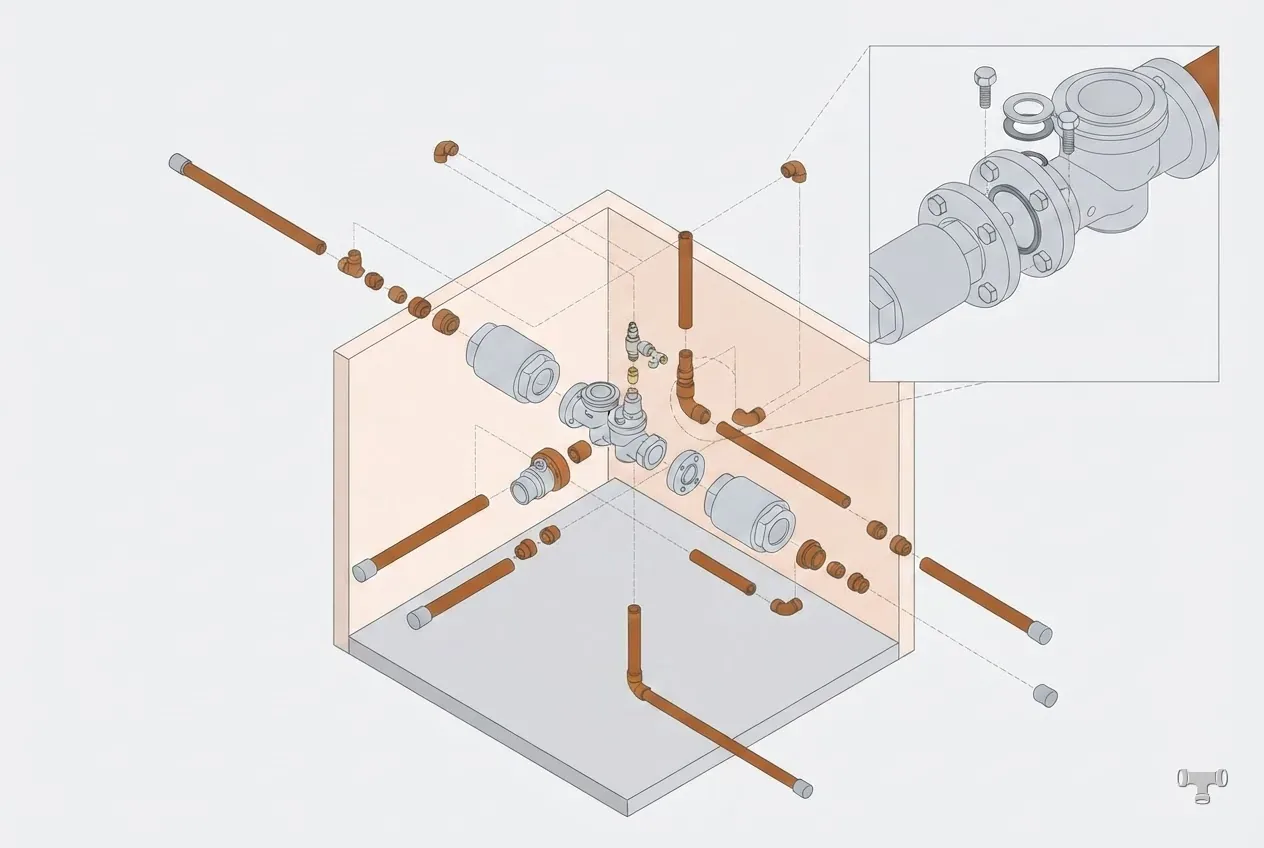
Testing is annual and it is somebody's name
Every testable assembly is tested at installation and at least annually thereafter by a certified tester, and the report is filed with the water purveyor. That is not a formality: internal checks fail silently, and a device that has not been tested is a device nobody can say is working.
When you install one, tell the owner in writing that the annual test is their obligation and who to call. Where the purveyor sends the reminders, say so. Where it does not, the first anyone hears about it is a violation notice.
The side effect: a closed system
Fitting a backflow assembly on the service closes the system. Water heated downstream can no longer expand back into the main, so the pressure rises on every heating cycle until the relief valve lifts. That is why IPC 607.3 requires thermal expansion control wherever such a device exists.
If you add backflow protection to a house with a water heater and no expansion tank, you have created the problem and it is yours to solve. Size the tank with the expansion tank calculator and fit it on the same visit.