Water softener installation cost
Updated 2026-09-04 · 8 min read
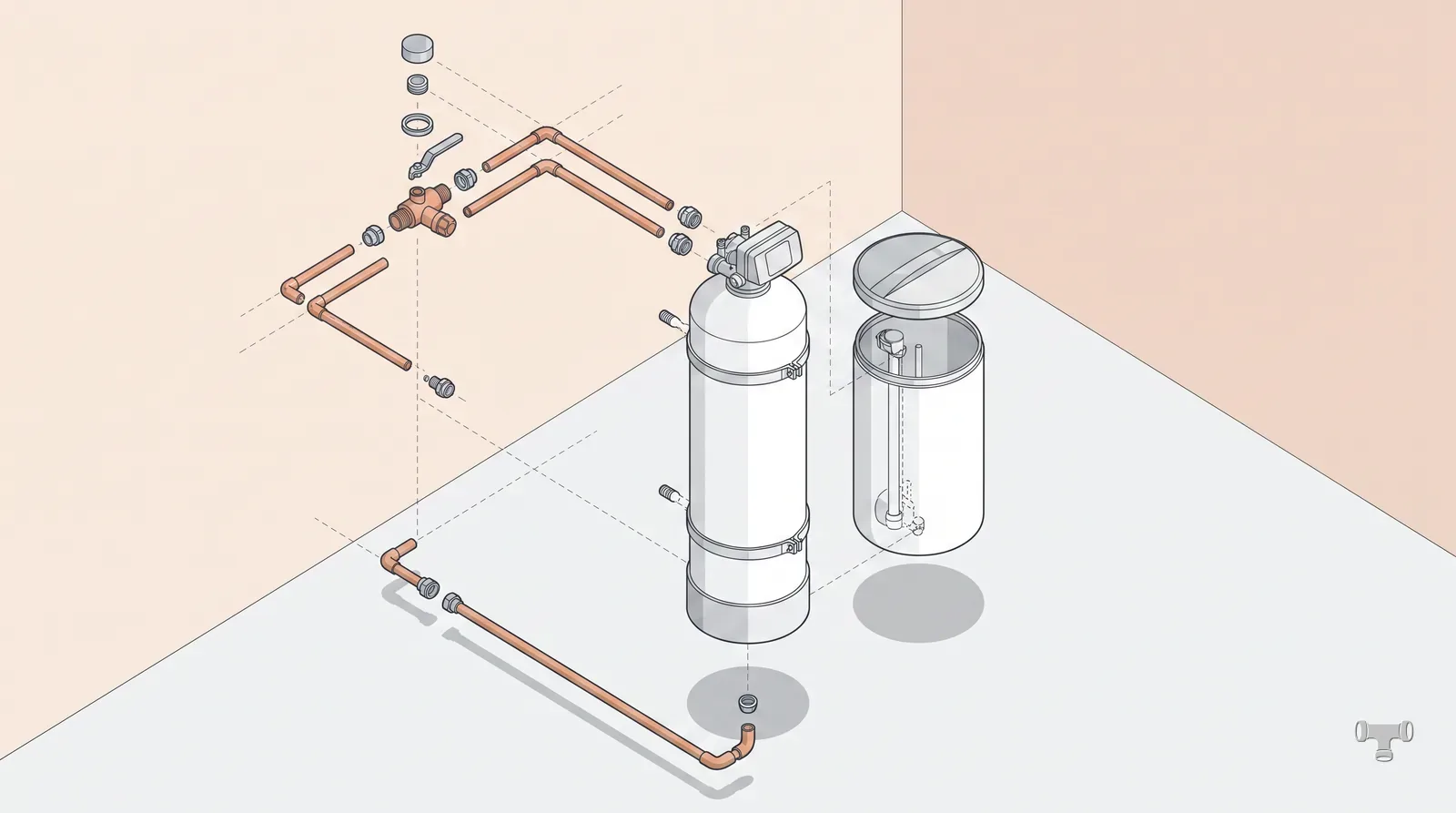
The installed band
Softener pricing spans a wide range because the phrase covers three different appliances: a timer-based unit, a metered demand-initiated unit, and a twin-tank system that never goes offline to regenerate. The installation labour barely changes between them; the hardware does.
| System | Unit | Hours | Note |
|---|---|---|---|
| Timer regeneration, single tank | $400–900 | 3–5 | Regenerates on a clock, salt-hungry |
| Metered demand-initiated | $700–1,800 | 3–5 | The default worth fitting |
| Twin tank | $1,400–3,200 | 4–6 | No downtime during regeneration |
| Softener plus carbon filter | $1,200–3,500 | 5–7 | Two vessels, two bypasses |
Loop or no loop is the whole job
A house plumbed with a softener loop has a pair of stubs and a bypass waiting in the garage. Connecting to it is an afternoon. A house without one needs the supply cut, rerouted and returned — and if the only sensible location is on the far side of a finished wall, the drywall line arrives with it.
Look before you quote. The difference between the two cases is larger than the difference between the cheapest and dearest unit in the table above.
Keep the hose bibbs hard
The drain and the air gap
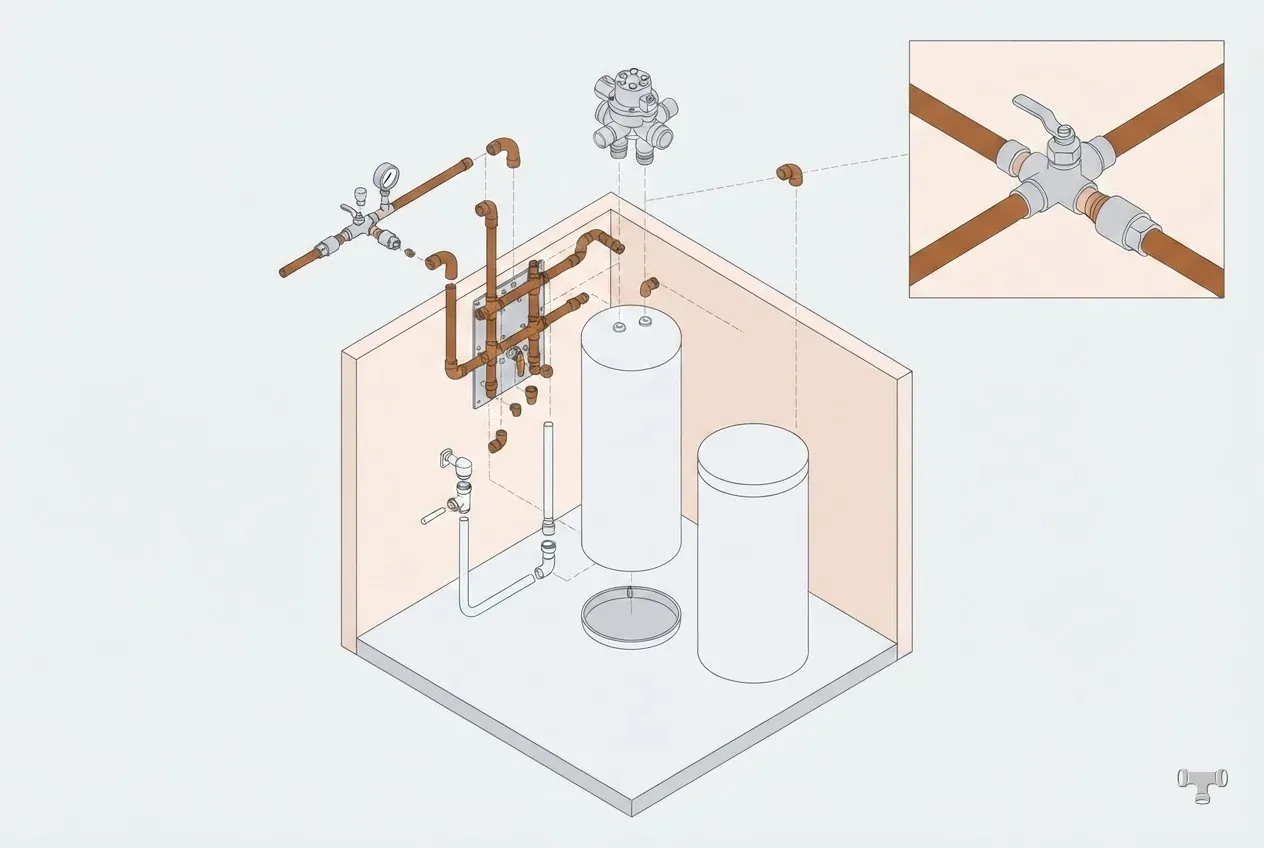
Regeneration discharges brine, and that discharge needs a drain with an air gap — a physical break between the softener's discharge and the receiving pipe so that a backed-up drain cannot siphon into the appliance. Directly connecting the discharge is a cross-connection, and it is one inspectors look for.
Where there is no floor drain or standpipe within reach, a condensate pump or a longer run becomes a line. It is small, and it is the item most often missing from a low quote.
Sizing is grains, not gallons
A softener is sized by grains of hardness removed between regenerations: household daily water use multiplied by hardness in grains per gallon, multiplied by the days you want between cycles. Get a hardness figure from the utility's water quality report or a test kit — guessing it is how a unit ends up regenerating every second day.
Iron changes the answer. Ferrous iron consumes capacity fast and ferric iron fouls resin outright, so above a couple of parts per million the honest recommendation is a separate iron filter ahead of the softener, not a bigger softener.
Running cost belongs in the comparison
Salt and the water used to regenerate are the ongoing lines. A metered unit regenerating on demand uses materially less of both than a timer unit set for the worst week of the year, and over a decade that gap is larger than the price difference between them.
If the customer is comparing two quotes, that is the number to put beside the install price. It is also the honest argument for the dearer unit.
Next in the run
- Water pressure calculatorA softener costs you pressurePSI · ft head
- Water heater replacement costOften quoted in the same visit10 min
- Repipe materialsWhat the loop is plumbed in2026-10-18
- Job price calculatorPut your own rate on the hoursFlat rate · %
- Water softener size calculatorSize it before pricing itgpg · ft³ · lb salt